Saturday, April 30, 2011

Save the Trees and Kill the Children

Today in society class, we were talking about China's One Child, One Family policy, and the song While you Were Sleeping, by a christian band, called Casting Crowns.  The song in general speaks to all Americans (I'm sure it includes Canada, China, Europe, and other developed countries) about the devastating state if our society.  It begins by talking about how the town of Bethlehem was sleeping (literally) and missed the magnificent birth of Jesus Christ.  The lyrics say that Bethlehem will go down in history as a city with no room for its king.
          Next, Jerusalem is criticized because that is where Jesus was crucified, and many turned a blind eye to it.Again, Jerusalem is chastised for being a city with no room for it's king.  They were sleeping (a metaphor for turning a blind eye to what was happening) while the man who came to save them was crucified upon their cross.
         By this point in the song, modern society must feel pretty self-righteous because we haven't made the same colossal mistakes that these biblical cities have.  However, the next couple of verses are dedicated to exposing the deep flaws in our society - letting us know that we aren't as perfect as we'd like to think.  The narrator predicts that our society "will be sleeping" when Jesus comes back for the Rapture.  They believe we will be so caught up in our superficial society that most of us will be devastated and left behind when Jesus comes back to save his believers from this tainted world.
          The line that relates to the One Child, One Family policy in China is when the narrator is referring to modern day society and says "while we're sung to sleep by philosophies of 'save the trees, and kill the children.' Will we be sleeping?"  This line hit me hard the first time I heard it because it's disgusting, but it's so true that we care more about the environment than valuable lives that we forfeit for our own convenience.  However, when I was listening to some statistic today in society class, the meaning of the lyrics escalated.
          A couple of years ago, China's government instituted a rule where families could only have one child to bring down the population.  Because of this, abortion rates skyrocketed.  Some women were even tortured and forced to abort their children.  Also, boys are more productive than girls, so if a couple bears a female child, it is not uncommon for them to kill the baby.  In some cases, the babies' sculls are even crushed after birth as a "humane" way of killing them.  So, what are the perceived benefits of these horrific means of population reduction?  Well, they hope the environment will be less stressed with less people and they believe that if there aren't as many children, then each individual child will get more attention in school; thus, China can raise smarter kids.
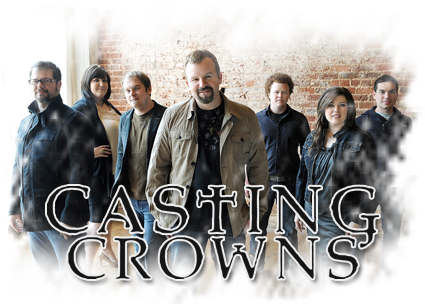
          This government policy sums up Casting Crowns' accusation on today's society.  We are truly being sung to sleep by philosophies of "save the trees and kill the children."  It's true that God values the environment, but he made man in his own image, and would never compromise his children for his land.  Luke 12:7 says, "Indeed, the very hairs on your head are numbered.  So don't  afraid; you are worth more than many sparrows."  I can't seem to recall a verse that talks about God knowing about every leaf on every tree, and the verse even says that humans are more important than any animal, so this verse makes it clear that he loves us more than the environment.    Unfortunately, even in Canada, our society eats up the lines that politicians feed to us about abortion being okay, causing us to turn a blind eye to the fact that our actions are hurting our creator.  Perhaps we will be sleeping when Jesus swoops down again to take his believers home.

Monday, April 18, 2011

Short Story Beginning: Carter Photography

Silence wafts through the house, settling in around her slight figure. She tiptoes into the black room.  The absence of light impairs her vision, but she doesn’t dare turn on the light in fear of waking up the two sleeping children in the next room.  She’d tried to close the door fully, but Alice insisted it remain precisely three centimetres open.  They’d played that old game where Hannah stands at the door and Alice directs her.
“A wittow more,” she’d said.  When Hannah tried to close the door a little more than a little more, Alice frowned.
“No! That’s too faw Hannah!” Alice whined.  So, the door remained in its regular position: three centimetres open – just enough to let light into their room that might wake the sleeping rascals.  Hannah isn’t about to risk waking them up, so she blindly fumbles around in the Carter’s bedroom.  She just needs twenty or maybe thirty bucks for the fair this weekend.  They’re loaded so they won’t notice – right?  Hannah glides over to Mr. Carter’s dresser with grace that would surely please her ballet instructor.
            She inches the first solid oak drawer open.  She wrinkles her nose in disgust as she sifts through some socks and underwear.  She finds nothing.  Hannah pulls the next drawer open with a little more haste.  Again – nothing.  As she searches the pockets of some brown corduroys from the third drawer, a magazine that was under them catches her eye.  She grabs it to examine it.  The eyes of half-naked women are locked in a seductive stare at Hannah.  Disgusted, she holds the magazine by the spine with two fingers and goes to place it back in its original position.  A wallet-sized photo falls to Hannah’s feet from the magazine.  As she picks up the photo, Chase’s voice interrupts her gasp.
“I’m thirst — what’s that?”
“I – it’s nothing,” Hannah stammered.  Chase stares at her with his arms crossed and a quizzical look stamped on his face.  Hannah takes a moment to gather her emotions.
“Well, do you want water or not?”  She asks.
“You’d better get to bed before your parents return.  I’ll go get you a glass.  Come with me.”  Chase eventually pulls himself away from his curiosity at the idea of quenching his thirst.  Hannah takes one last look at the photo before slipping it in her pocket and sliding the drawer shut with her foot as she walks past.  No, she wasn’t mistaken.  The image she saw was of her, taken last summer, in her favourite red bikini.  She clutches her stomach and struggles not to imagine why he would need that photo.

Friday, April 15, 2011

If These Walls Could Talk

            They say, “If these walls could talk,” as if this personification would change lives and unlock the secrets that would make every aspect of life clear.  If these walls could talk – well, it wouldn’t make much of a difference.  No lives would transform; no secrets would be revealed.  The only thing these walls have to offer is a blank space, ready to lure gossip out of you if they sense a heart gone sour.  The pale, green paint is the perfect backdrop for bitter pens to scrawl messages of hatred across.  These walls make us dread performing a simple daily task.  “What if my name is on the wall this time?” I ask myself.  I’m not sure how I would react if that happened.  On one hand, I know that whoever etched my name is simply a coward who can’t face me in person.  On the other hand, as badly as I want to forget that my name is even there, the words will still cut me deep.  Maybe I’ll try to change – but I hope that I wouldn’t give in that easily.
           
           There are so many things that could be said to make – rather than break – someone’s day.  Occasionally I’ll see a nice memo like “you’re beautiful” Or “God loves you,” but these messages are few and far between because it would be pointless to write a nice message, right?  That would just build people up.  What if they got too confident?  No – it’s safer to simply tear everyone down until every shred of confidence is diminished, leaving an empty shell where their personality once was.  That’s the only way to climb to the top of the social ladder.
            These walls are capable of speaking volumes without even uttering a word.  These walls hold far too many souls captive.  They have the kind of power that is unattainable for even the most tenacious of criticizers.  The walls hold them under their spell as well.  Janitors have tried countless times to defeat the wall with another layer of green paint, but the walls always prevail, coming back with even pettier messages than before.   
            When it’s time to leave the unforgiving, judgemental world behind, I flush the toilet and walk out of the stall.  I pray for each letter to peel away from the wall – one by one – and fall into the toilet to be flushed down with the rest of the waste.

Thursday, March 3, 2011

Maybe Stephen King is on to Something

            We see it all the time.  It’s on the news, in the newspaper, and in magazines.  We read about it and just shake our heads at the brutal nature of these murders and acts of violence occurring all around us.  We judge the perpetrator; perhaps we wonder how he got around to hitting rock bottom and what drove him to commit such an abhorred crime.  For example, I was watching a hockey game the other night and a saw an old acquaintance of mine hit another player with unnecessary force.  In the moment, I was disgusted by his short temper and couldn’t believe what he had done.  Now, with some hindsight, I realize that maybe he wasn’t justified in drilling that player into the boards, but I have no right to judge him.  A few years back he went through a traumatic experience involving a family member and it’s more than likely that this has had a lasting effect on his personality.  However, it’s very rare would I would give a criminal the benefit of the doubt, especially if I don’t know them, because identifying with him or her would be like committing the assault ourselves and surely I could never be capable of such violence, no matter what the situation is… right?

Stanley Milgram

            Results of Stanley Milgram's obedience experiment in 1963 ripped thousands of people out of this naïve mindset.  He proved that ordinary people, like you and I are without a doubt morally capable of putting another person in pain and even torturing them, for doing nearly nothing wrong.  In his experiment, regular people were willing to torture other innocent people to the point of knocking them unconscious.  The natural first reaction to this data is to once again ask what drove these people to such violent behaviour.  The only driving force behind their actions was a man in a white lab coat saying, “Just do it."
            These people didn’t need any more motivation than the encouragement of an authority figure to inflict pain on an innocent human.  63% of them followed through with the experiment until their subject had been exposed to the maximum amount of voltage that the experiment would allow, leaving the subjects unconscious.  Before going unconscious, the subjects begged the people administering the shock to stop and they screamed in pain (it was all just acting, of course – but the people administering shocks didn’t know that).  We would all like to believe that we would be in that 27% of people that didn’t knock our subjects unconscious, but in reality most of us would have been included in that larger percentage of people that tortured innocent people out of obedience.  The part that scares me the most is that the leader of the experiment didn’t have a gun and didn’t force the participants into doing anything, he simply urged them to continue.  If the need to obey could take over my morals so easily, it makes me shiver to imagine the things I would do at gun point or even with another form of motivation, like revenge.   
            Most participants of the experiment carried on with the shocking because they thought that they wouldn’t be held accountable for their actions, but the experimenter would.  If we had no judicial system, would today’s society actually break out in chaos and murder, rape or torture with as much ease as we have when we pick up the mail in the morning?  Would our morals not hold us back?  I suppose it comes down to the old question, “if this man jumped off a bridge, would you?”  Except the question has been changed to, “if this man told you to push someone off a bridge, would you?” Apparently most of us would if the man looked like he was an authority figure and would take responsibility for our actions.
Nazis were all tried after WWII for the brutality that they brought upon innocent people in concentration camps.  Most of them said, “I was just following orders.”  I think it’s safe to say that if they didn’t follow orders, Hitler would have killed them and probably their families as well.  Once again, we’d like to think that if placed in the same situation as the Nazis, we would have taken mercy on the innocent people.   After Milgram’s experiment, I find it unlikely that anyone in today’s society would have sacrificed their lives for those around them.
My intentions in bringing up this experiment are certainly not to excuse murderers, rapists or any criminals for their crimes.  My intentions are just to indicate that we probably don’t deserve this self-righteous pedestal that we fabricate for ourselves.  We seem to have this preconceived notion that criminals are a different breed altogether.  Our society would like to think that comparing themselves to criminals is like comparing night and day, but perhaps we all have a darker side waiting to be provoked.  Maybe Stephen King is on to something.